Tight work trousers can feel acceptable for ten minutes and frustrating after several hours. Longer comfort depends on more than choosing a larger waist size. The rise, thigh room, seat shape, fabric, and leg cut all affect how trousers behave while sitting and moving. A good work fit should remain neat without forcing you to constantly pull, loosen, or reposition the garment.
Identify Where the Tightness Starts
Pay attention to the exact pressure point. A tight waistband suggests a different fit problem from pulling across the thighs or tension through the seat.
General fashion fit inspiration can help you compare silhouettes, but your own movement provides better evidence than a mirror. Sit at a desk, climb a few stairs, and bend normally before deciding whether trousers fit comfortably.
Look for Pulling Lines
Horizontal wrinkles across the hips, strained pockets, or fabric pulling toward the zipper can indicate insufficient room. A waistband that fits doesn’t automatically mean the rest of the trousers fit.
Sizing up may help, but sometimes a different cut solves the problem more effectively.
Choose a Rise That Suits Your Body
Low-, mid-, and high-rise trousers position the waistband differently, changing how the garment feels when seated. A rise that looks good while standing may dig into the abdomen once you sit.
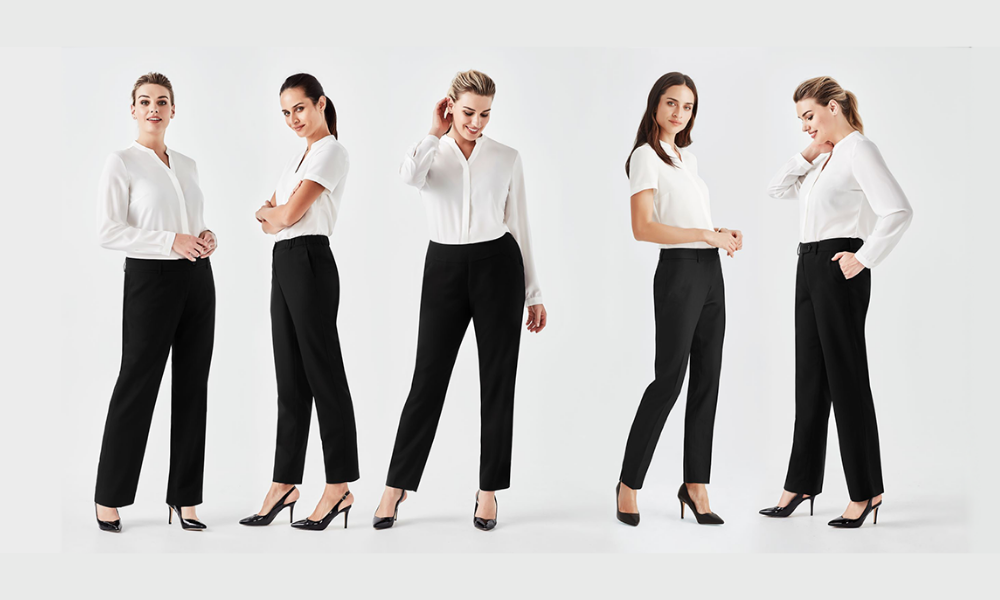
People comparing comfortable workwear styling should pay attention to rise as closely as color or leg shape. The most flattering option on a hanger isn’t always the easiest one to wear through a full workday.
| Fit Problem | Possible Cause | What to Try |
|---|---|---|
| Tight waistband | Insufficient waist room | Larger size or different rise |
| Pulling at thighs | Narrow upper leg | Straight or relaxed cut |
| Tight seat | Limited hip room | Curvier or roomier fit |
| Restrictive knees | Narrow leg shape | Wider leg opening |
Give the Thighs and Seat More Room
Many trousers become uncomfortable because the waist fits while the upper leg doesn’t. Straight, relaxed, athletic, or curvy cuts may offer extra room where you need it without making the waistband excessively loose.
Looking through wardrobe fit references can also help you compare how different trouser silhouettes sit on the body. Focus on clean drape rather than trying to copy a particular label or trend.
Stretch Helps, but It Has Limits
A small amount of stretch can make trousers easier to sit and walk in. However, stretch shouldn’t be used to compensate for a garment that is fundamentally too small.
If the fabric is constantly under tension, pockets may pull and seams may look strained. A better base fit usually feels calmer and looks cleaner.
Test Trousers in Real Work Positions
Fitting-room mirrors mostly show the standing view. Workdays include sitting, walking, reaching, commuting, and sometimes climbing stairs.
Spend a minute seated before buying. Check whether the waistband digs in, whether the thighs feel trapped, and whether the fabric pulls sharply across the hips. Comfort problems that appear immediately rarely improve after several hours.
Why Sizing Up Doesn’t Always Solve It
A larger size can add needed space, but it may also make the waistband, crotch length, or lower leg too loose. Clothing sizes are built around a particular set of proportions.
That’s why changing the cut can work better than endlessly changing the number on the label. If one brand’s slim trousers always pinch your thighs, moving to its straight or relaxed version may preserve the waist fit while giving you more useful room.
Frequently Asked Questions
Should work trousers feel tight when new?
They should feel secure, not restrictive. Mild differences in fabric feel are normal, but obvious pulling, digging, or limited movement are signs that another size or cut may work better.
Are wide-leg trousers more comfortable for work?
They often provide more leg room, though comfort also depends on the waist, rise, seat, and fabric. A wide leg won’t solve a waistband or hip fit problem.
Can a tailor loosen tight trousers?
Sometimes. The amount of extra fabric left inside the seams determines how much adjustment is possible. A tailor can inspect the garment and explain whether letting out the waist or seat is realistic.
Choose Comfort Before the Workday Tests It
Work trousers should support hours of movement, not merely look good while standing in front of a mirror. Identify where tightness occurs, test several rises and cuts, and sit before buying. If a garment needs stretch fabric to make an obviously strained fit tolerable, try a roomier shape instead. The better trouser is the one you stop thinking about once work begins.