
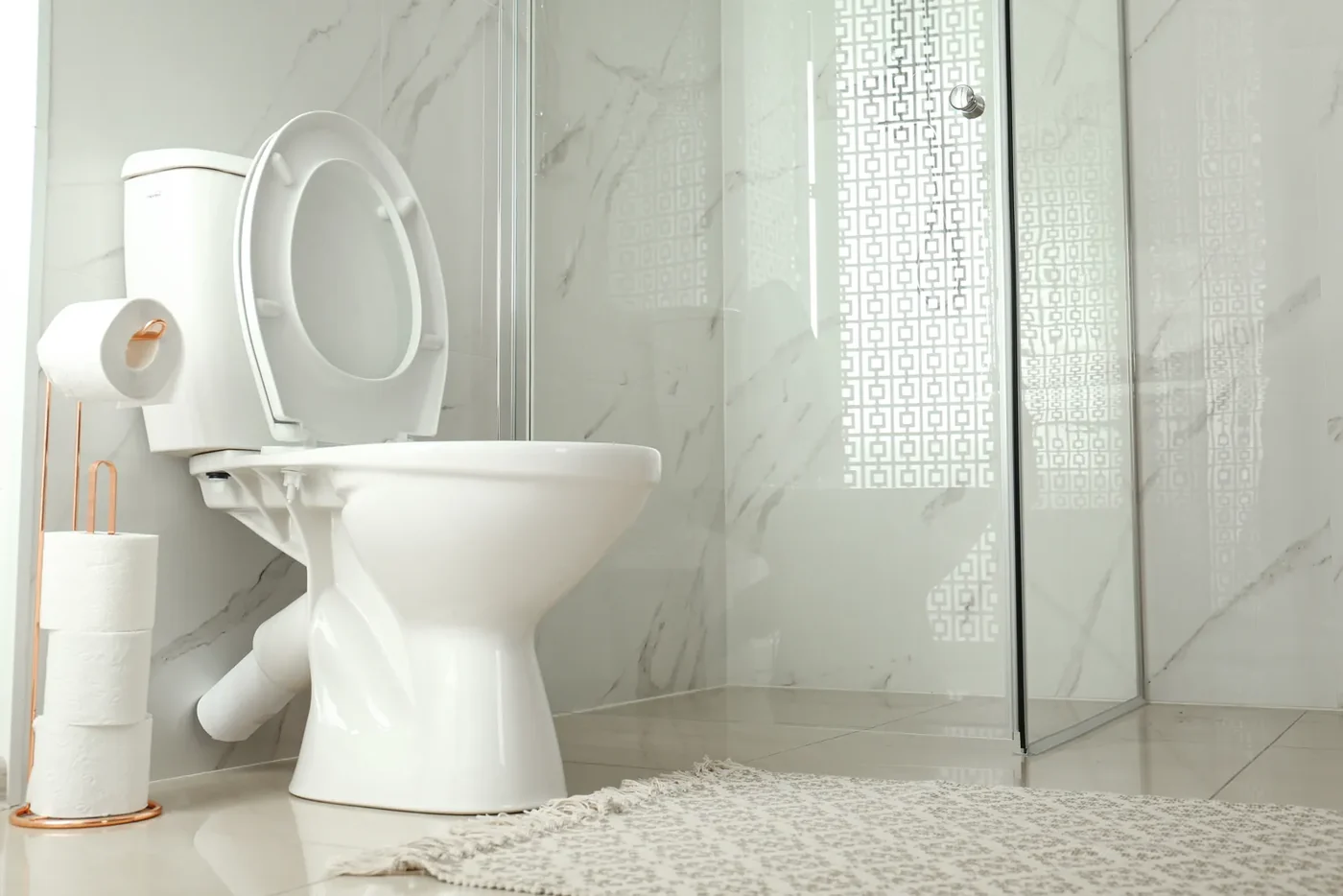
A toilet that leaves paper behind or needs repeated flushing doesn’t automatically need replacement. A weak toilet flush can result from low tank water, restricted rim openings, an improperly adjusted flapper, a partial clog, or another correctable issue. A few simple checks can usually reveal whether the problem is inside the tank, bowl, or drain.
Start With the Water Level in the Tank
Remove the tank lid and compare the water level with the manufacturer’s indicated fill line when one is present. Too little water means the toilet begins each flush with less energy than intended.
A float or fill-valve adjustment may correct an improperly low level. Don’t raise the water so high that it continuously spills into the overflow tube.
Homeowners reviewing bathroom improvement ideas can treat flush performance as part of fixture maintenance rather than assuming cosmetic upgrades or complete replacement are necessary.
Watch What Happens During the Flush
Flush once while observing the tank. The flapper should lift enough to release the appropriate volume of water before closing.
If it drops almost immediately, the chain may be too loose or the flapper may not be working correctly. A chain pulled too tight can cause a different problem by preventing the flapper from sealing fully afterward.
Look inside the bowl
Water should enter the bowl with noticeable movement. Weak or uneven flow from the rim can suggest mineral buildup or blocked passages, especially in areas with hard water.
Rule Out a Partial Clog
A toilet can still drain while partially blocked. Warning signs include a slow bowl response, water rising unusually high before falling, or weak performance that appeared suddenly.
A toilet plunger with a flange is usually the first tool to try. Create a good seal and use controlled strokes rather than aggressive splashing.
Broader practical home setup tips can also help keep basic maintenance tools accessible without cluttering bathrooms and utility storage areas.
| Symptom | Possible Cause | First Check |
|---|---|---|
| Weak flush every time | Low tank level | Fill setting |
| Short flush | Flapper closes early | Chain and flapper |
| Water rises first | Partial blockage | Plunge toilet |
| Uneven bowl flow | Rim restriction | Inspect openings |
Check for Restricted Water Openings
Mineral deposits can gradually reduce water flow through rim holes and other bowl passages. The change may be slow enough that flush performance seems to decline without an obvious failure.
Inspect visible openings carefully and clean accessible mineral buildup using methods appropriate for the fixture material. Avoid using sharp metal tools that can damage the porcelain surface.
Following general room maintenance guidance can make it easier to notice gradual changes in bathroom fixtures before they become larger repair issues.
Repeated Flushing Is Not a Real Fix
Holding the handle down or flushing two or three times can move waste temporarily, but it doesn’t correct the underlying cause. It may also use significantly more water than a properly functioning single flush.
Don’t immediately blame the toilet’s age either. A newer toilet can flush poorly because of tank settings or a blockage, while an older fixture may work well after basic maintenance.
Frequently Asked Questions
Why did my toilet suddenly start flushing weakly?
A sudden change can point to a partial clog, flapper problem, chain issue, or fill-valve malfunction. Compare current tank behavior with how the toilet normally operates.
Can hard water make a toilet flush weaker?
Mineral deposits may restrict small water passages around the rim or inside the bowl. Reduced water movement can gradually affect flushing performance even when the tank fills normally.
When does a weak flush require a plumber?
Call for help when plunging doesn’t correct suspected blockage, several drains are acting abnormally, the toilet repeatedly backs up, or the problem appears to involve the main drainage system.
Fix the Cause Before Replacing the Toilet
Check tank water level, flapper operation, bowl flow, and possible blockage before shopping for a new fixture. Many weak-flush complaints come from maintenance or adjustment issues rather than a failed toilet. Once you identify where the flush is losing power, the repair becomes much easier to target.