
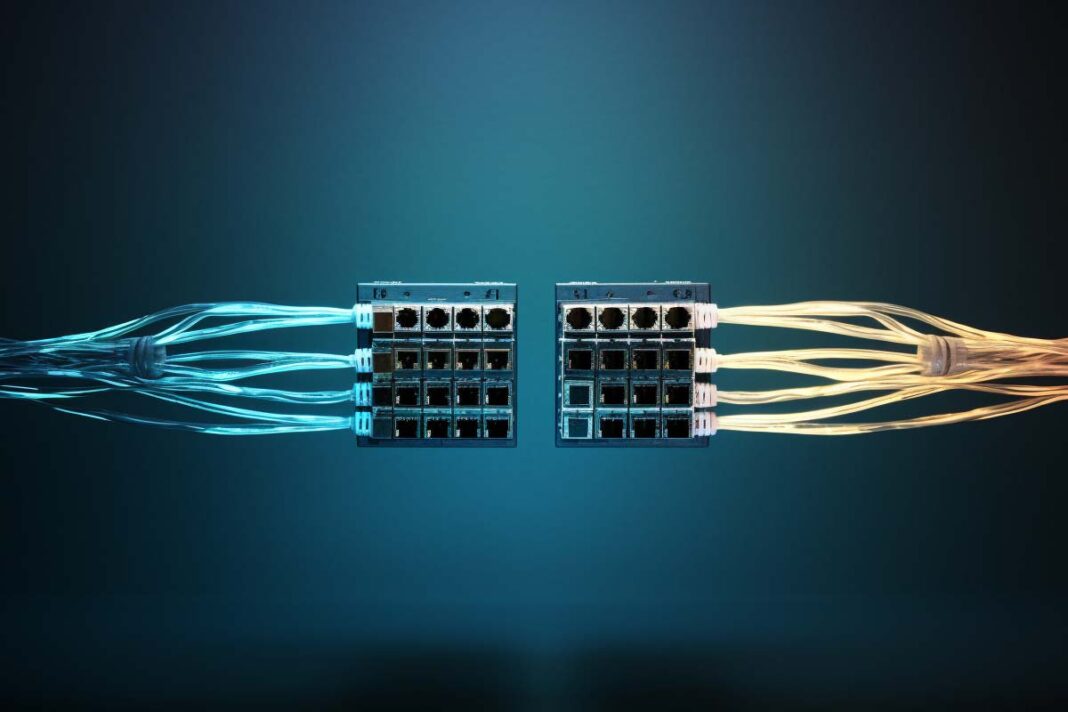

Recent coverage in networking journals has drawn fresh attention to half duplex communication modes amid rising interest in efficient, low-power designs for IoT expansions and legacy system audits. Engineers and developers, facing bandwidth constraints in dense device deployments, revisit half duplex setups that prioritize simplicity over speed. Public discussions highlight how this foundational approach persists in walkie-talkies, early Ethernet hubs, and modern sensor networks, even as full duplex dominates high-throughput links. The mode’s bi-directional but alternating data flow—sending or receiving, never both simultaneously—underpins reliable exchanges where collisions demand careful management. Conferences in late 2025 noted half duplex’s role in cost-sensitive wireless protocols, sparking renewed curiosity among beginners navigating microcontroller projects or industrial controls. Operators report steady demand for half duplex troubleshooting in mixed environments, where autonegotiation failures expose vulnerabilities. This guide examines half duplex mechanics through practical lenses, reflecting its quiet endurance in an era of relentless upgrades. Coverage underscores unresolved tensions between efficiency gains and latency trade-offs, as deployments scale.
Fundamentals of Half Duplex Operation
Defining Core Transmission Mechanics
Half duplex communication permits data flow in both directions across a single channel, but only one way at a time. Devices alternate between transmitting and receiving, much like walkie-talkie users pressing to talk then releasing to listen. This setup relies on protocols to signal turn-taking, preventing overlaps that trigger collisions. In early Ethernet hubs, for instance, all connected nodes shared the medium, forcing sequential access. Modern implementations, such as STM32 UART configurations, enable this via single-wire buses where hardware toggles modes explicitly. Bandwidth utilization halves compared to full duplex, yet the approach suits sporadic exchanges. Operators note that without strict coordination, latency builds as devices queue transmissions. Public records show half duplex thriving in resource-limited scenarios, where full setups prove overkill.
Contrasting with Simplex and Full Duplex
Simplex allows one-way traffic only, like keyboard inputs to a display, lacking response capability. Half duplex introduces bidirectionality without simultaneity, bridging to full duplex where separate channels handle send and receive concurrently. Ethernet evolved from half duplex hubs—prone to collisions—to switch-based full duplex, doubling throughput sans contention. Wireless networks like Wi-Fi embody half duplex, with access points arbitrating device turns via contention protocols. Full duplex demands dual paths, raising complexity and power draw, while half duplex leverages one channel efficiently. Coverage points to half duplex’s edge in battery devices, though it cedes speed to rivals. Beginners grasp this by noting collision detection in half duplex Ethernet, absent in full modes.
Historical Emergence in Networking
Half duplex roots trace to original Ethernet standards in the 1980s, where coaxial buses mandated CSMA/CD for shared access. Hubs extended this to twisted-pair, amplifying collision domains as nodes multiplied. By the 1990s, Fast Ethernet retained half duplex options for legacy compatibility, though switches signaled a shift. Walkie-talkies predated these, embodying the mode since military radios of World War II. Industrial protocols adopted it for rugged reliability, avoiding duplex mismatches. Recent audits of enterprise closets reveal lingering half duplex ports, vestiges of phased-out hubs. Developers reference IEEE 802.3 clauses detailing half duplex timing, essential for revival projects. The mode’s persistence stems from proven collision handling, even as gigabit standards deprecate it.
Physical Layer Requirements
At the physical layer, half duplex demands transceivers capable of mode switching, often via pin controls or registers. RS-485 buses exemplify this, linking drivers and receivers internally for two-wire operation. Ethernet half duplex used four twisted pairs looped back in hubs, ensuring signal integrity during alternations. Voltage levels and impedance matching prevent echoes, critical in long runs. Microcontrollers like those in IoT kits configure UARTs for half duplex by enabling single-pin bidirectional pins. Cable standards, such as Cat5 for 100BASE-TX half duplex, support up to 100 meters before attenuation. Field reports emphasize grounding to curb noise, which mimics collisions. Beginners test setups with loopback plugs, verifying toggle without external loops.
Basic Collision Detection Process
Collisions arise when two devices transmit simultaneously in half duplex, garbling signals until detection halts both. CSMA/CD listens before sending (carrier sense), detects mid-transmission (collision detection), then backs off randomly. Ethernet frames carry jam signals to propagate awareness across hubs. Multi-tap repeaters extend this domain, heightening risks beyond 512 bits. Modern emulations in software-defined radios simulate it for training. Latency spikes post-collision as exponential backoff delays retries. Operators monitor counters for excessive events, signaling overload. Half duplex’s jam pulse—32 bits of ones—ensures network-wide alerts, a elegance in simplicity.
Practical Applications Across Industries
Walkie-Talkies and Two-Way Radios
Walkie-talkies epitomize half duplex, with push-to-talk buttons enforcing one-speaker rules. Emergency services rely on them for concise coordination, where simultaneity risks chaos. Frequencies like UHF allocate channels, minimizing external interference. Range varies from hundreds of meters in urban clutter to miles open-field, limited by power caps. Military variants add encryption, yet retain core alternation. Recent deployments in disaster zones praise battery life, outlasting full duplex peers. Users train on “over” phrasing to cue switches, averting hangs. Coverage notes surge in consumer models for events, blending nostalgia with utility.
Legacy Ethernet Hubs and Networks
Ethernet hubs centralized half duplex traffic, broadcasting packets to all ports for destination filtering. 10BASE-T versions capped at 10 Mbps, riddled with collisions in busy offices. Dual-speed models bridged 10/100 Mbps, easing migrations. By 2000s, switches supplanted them, isolating domains per port. Warehouses retain hubs for printer sharing, tolerating latency. Configuration demanded manual duplex matching to dodge mismatches—late collisions plague autosense fails. Archivists preserve them for retro nets, highlighting CSMA/CD’s ingenuity. Half duplex hubs democratized LANs initially, before scalability bit.
Industrial Automation and Sensors
Factories deploy half duplex RS-485 for PLC-sensor chains, spanning noisy floors. Modbus RTU protocols govern polling, master querying slaves sequentially. Distance hits 1200 meters at low baud, dropping with speed. Repeaters segment buses, curbing reflections. Vibration isolates prevent ground loops, common culprits. IoT gateways poll endpoints in half duplex, aggregating to cloud. Power budgets favor it for solar nodes, idling receivers. Field upgrades mix modes, risking mismatches—logs reveal CRC spikes. Operators value determinism over throughput here.
RFID and Access Control Systems
RFID readers interrogate tags in half duplex bursts: query then backscatters response. Passive tags harvest energy during listens, flipping for replies. Anti-collision slots aloha-like algorithms. Door controllers echo badge data upstream, alternating with queries. Inventory wands sweep shelves, buffering hits. Frequencies—LF, HF, UHF—tune range versus speed trade-offs. Security cams append half duplex audio, syncing with video. Deployments in warehouses log throughput dips under density, yet persist for cost.
Remote Controls and Drones
TV remotes pulse IR in half duplex, commands acknowledged implicitly by action. Drone links uplink telemetry, downlink controls alternately on 2.4 GHz. FPV feeds buffer frames during transmits. Protocols like MAVLink structure packets, CRC-appended. Latency irks racers, favoring low-duty cycles. Home assistants query bulbs similarly, polling status post-command. Battery math dictates 1% duty for days-long flight. Fail-safes timeout unresponsive links, forcing RTL.
Advantages and Limitations in Depth
Resource Efficiency Gains
Half duplex economizes channels, doubling utility over simplex without full duplex’s split. Single-wire UARTs slash pins in MCUs, trimming boards. Power cycles low during receives, ideal for harvesters. Bandwidth shares sans waste in bursty traffic. Hubs multiplex dozens cheaply, predating switches. LoRaWAN gates poll end-devices, conserving spectrum. Costs plummet—no echo cancellers needed. Field metrics show 30% less draw in sensors. Scalability fits sparse nets, avoiding overprovision.
Cost and Simplicity Benefits
Hardware pares to transceivers, ditching dual PHYs. Off-shelf chips abound for RS-485 half duplex. Firmware toggles modes via bits, no ASICs. Legacy gear integrates seamlessly, dodging rewires. Prototypes spin fast—loopback tests suffice. Enterprises save on cabling, one-pair suffices. Beginners breadboard effortlessly, grasping toggles. Mass IoT favors it, billions units yearly.
Latency and Throughput Drawbacks
Alternations inject delays, worst in contention. Ethernet half duplex crawls past 30% util, backoffs exploding. Wi-Fi stalls under load, RTS/CTS mitigating marginally. Real-time falters—VoIP clips on switches. Queueing theory predicts tails at high loads. Upgrades tempt, yet mismatches cripple worse. Counters flag it: collisions >1%.
Compatibility Challenges Today
Modern full duplex gear balks at half, autoneg failing to half. Switches drop legacy ports, isolating hubs. VLANs quarantine mismatches, symptoms lurk. IoT mixes protocols, adapters bridging uneasily. Firmware flags duplex logs, hunts culprits. Deprecations loom—IEEE eyes pure full. Revivals demand emulators.
Power and Heat Management Issues
Transmits spike draw, receives idle low—net win for duty-cycled. Full duplex baselines higher, fans whirring. Hubs dissipate less, passive cooled. Drones throttle bursts for endurance. Metrics tout 50% savings in polls. Overheats rare, absent simultaneity.
Implementation and Troubleshooting Essentials
Hardware Setup Configurations
Breadboard single-wire UART: tie TX/RX pins, toggle HAL functions. RS-485: A/B diffs, 120Ω terminators ends. Hubs: straight Cat5, no crossovers pre-auto. MCUs: clock UART baud, enable half bit. Shields curb EMI—ferrites snap on. Power decouples clean. Test loopback first, scope toggles.
Software Protocol Choices
Modbus masters poll slaves, timeouts guarding hangs. Custom: headers flag direction, CRC tails. Arduino libs HAL toggle seamlessly. FreeRTOS tasks serialize access. Buffers absorb bursts, ACKs confirm. Wireshark sniffs Ethernet half, dissects CSMA.
Common Duplex Mismatch Fixes
Logs scream late collisions—one full, one half. Force both ends matching, down/up links. Disable auto on ancients. Counters: FCS errs skyrocket. Spikes align errors half-duplex side. Cables suspect—swap test. Firmware updates renegotiate.
Performance Optimization Tactics
Duty cycles: 10% transmit max. Prioritize criticals via tokens. Segment buses repeaters. Compress packets, delta encode sensors. Firmware predicts turns, prefills. Monitor utils <30%, thin loads. Hybrids: full cores, half edges.
Diagnostic Tools and Monitoring
Wireshark captures collisions, jam patterns. iPerf baselines throughput. SNMP polls counters—collisions/util. Oscilloscopes eye signals, eye diagrams clean. CLI shows duplex: sh int. Apps graph trends, alert thresholds. Logs timestamp failsafes.
The public record on half duplex reveals a mode etched into networking’s foundations, from Ethernet’s collision-prone youth to IoT’s frugal present. Deployments affirm its thrift in power and wire, yet expose throughput ceilings that full duplex vaults routinely. Recent LoRaWAN tweaks and STM32 integrations signal tweaks, not obsolescence—efficiency trumps speed in sprawls. Unresolved lingers in hybrids: mismatches persist, latency haunts edges. Developers weigh it against 5G’s full-duplex push, where spectrum wars intensify. No universal shift appears; niches entrench it, from drones polling ground to factories chaining sensors. Forward paths probe full-duplex silicon sans self-interference, but half duplex’s simplicity endures for beginners scaling prototypes. Coverage leaves viability open—2026 trials in dense IoT may tip balances, or cement legacies. Operators ponder: upgrade pains versus proven pauses? The ledger balances unevenly still.