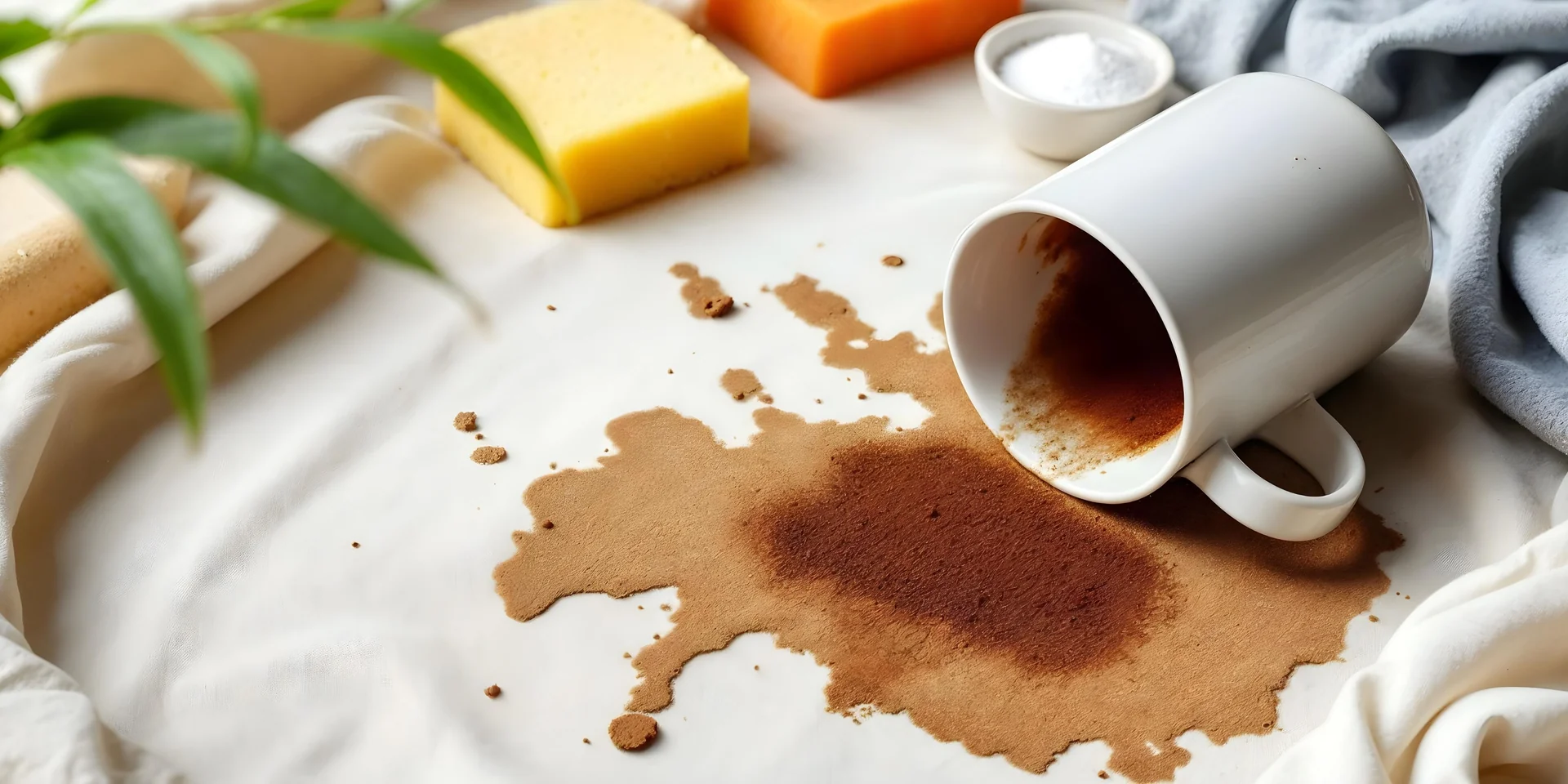
A spilled coffee can move through seat fabric quickly, carrying liquid, milk, sugar, and flavorings into the upholstery. Acting early gives you the best chance of reducing both staining and lingering odor.
The first goal isn’t aggressive scrubbing. It’s removing as much liquid as possible without spreading the spill farther or forcing it deeper into the seat cushion.
Blot the Spill Before Adding Cleaner
Use clean absorbent towels to blot the wet area. Press down gently, lift the towel, move to a clean section, and repeat until little moisture transfers.
Rubbing back and forth can enlarge the stain by moving coffee into surrounding fibers. It can also distort the appearance of some upholstery materials.
Remove Solid Residue
If the drink contained whipped cream, syrup, or other thick ingredients, carefully lift away residue before treating the liquid stain. Removing surface material prevents it from being worked deeper into the fabric.
Match the Cleaner to the Upholstery
Fabric seats generally need an upholstery-safe cleaner, while leather and synthetic leather may require products formulated specifically for those surfaces. Always follow the vehicle and product-care instructions where available.
People looking through car upkeep resources may encounter many cleaning suggestions, yet upholstery type should determine the treatment rather than a one-size-fits-all recipe.
Test any unfamiliar product on a concealed area first. Discoloration from the wrong cleaner can be harder to correct than the original coffee mark.
Use Small Amounts of Moisture
Apply cleaner to a cloth when practical rather than saturating the seat. Work from the outside edge of the stain toward the center to reduce spreading.
General vehicle maintenance discussions can be useful for broader ownership ideas, but liquid spills require restraint. Excess water may carry contamination deeper into foam beneath the upholstery.
| Situation | First Action | Avoid |
|---|---|---|
| Fresh black coffee | Blot immediately | Hard rubbing |
| Coffee with milk | Blot and clean promptly | Leaving residue |
| Fabric seat | Use upholstery-safe cleaner | Saturating cushion |
| Leather seat | Use suitable leather product | Harsh detergents |
Dry the Area Thoroughly
After cleaning, blot away remaining moisture using dry towels. Leave the area exposed to airflow until it is fully dry, following safe ventilation practices.
Broader automotive care reading may cover varied maintenance concerns, but upholstery spills have one easily overlooked issue: moisture trapped beneath the surface can remain after the fabric feels only slightly damp.
If practical, keep the seat unused while it dries. Avoid covering a damp area with plastic or a seat cover because that can slow evaporation.
Mistakes That Make Coffee Stains Harder to Remove
Waiting several days gives coffee residue more time to dry into the material. Drinks containing milk or sugar can also leave sticky contamination and unpleasant odors if the upholstery isn’t cleaned adequately.
Strong household chemicals aren’t automatically better. Bleach, concentrated solvents, and abrasive products can permanently discolor or weaken interior materials.
Another mistake is adding air freshener before dealing with the spill itself. Fragrance may cover an odor briefly, but it doesn’t remove the organic residue causing it.
If a large spill soaked deep into the cushion and odor persists after surface cleaning, professional extraction or upholstery cleaning may be worth considering.
Frequently Asked Questions
Can old coffee stains come out of car seats?
Some older stains can improve with careful upholstery cleaning, but results depend on the seat material, drink ingredients, and how deeply the liquid penetrated.
Should I scrub a fresh coffee spill?
Blotting is usually the better first step. Vigorous scrubbing can spread the liquid and push contamination farther into upholstery fibers.
Why does my car seat smell after a coffee spill?
Milk, sugar, and other drink ingredients can remain beneath the surface. Residual moisture and contamination may continue producing odor until properly cleaned and dried.
Act Before the Spill Becomes a Bigger Job
Fast action can prevent a small coffee accident from turning into a permanent-looking stain. Blot immediately, use a cleaner appropriate for the upholstery, control the amount of moisture, and allow the seat to dry fully.
Don’t try to compensate for lost time with harsher chemicals. Careful treatment protects both the appearance of the seat and the material underneath it.