
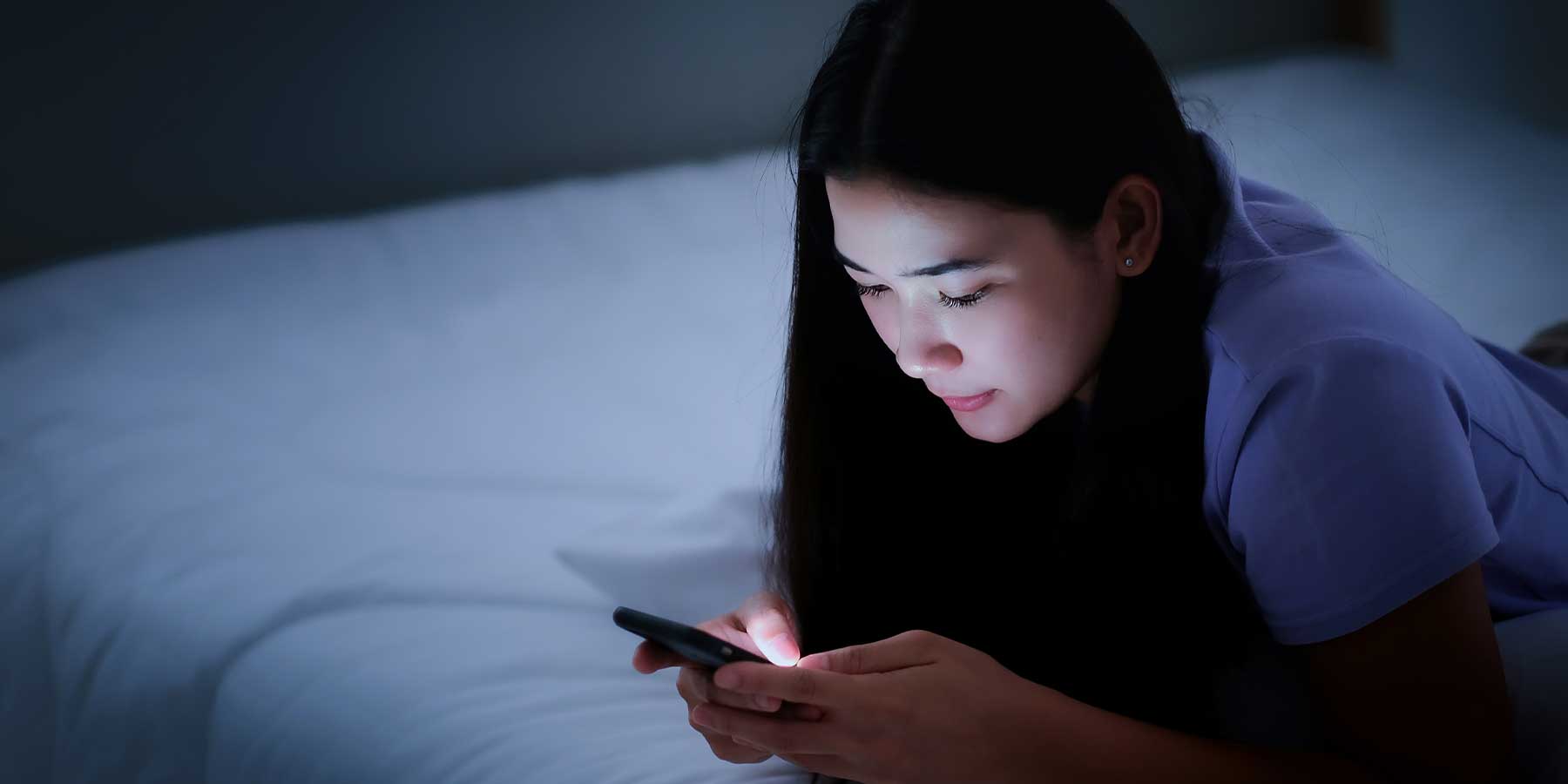
Phones, tablets, televisions, and laptops can keep evenings bright long after natural daylight has faded. Bright evening screens may interfere with sleep through both light exposure and mental stimulation. You don’t necessarily need a device-free household. Creating clearer boundaries before bed can reduce unnecessary alertness and make the final part of the evening feel more like preparation for sleep.
Why Screens Can Keep the Brain Alert
Light is one of the signals involved in regulating circadian timing. Bright evening environments may encourage alertness at a time when you’re trying to move toward sleep.
The NHLBI’s healthy sleep habit recommendations advise using the period before bed for quiet time and avoiding bright artificial light that can signal the brain to stay awake.
Content matters too. Work messages, arguments, games, breaking news, and fast-moving videos can be stimulating even when the screen itself is dim.
Create a Clear End to High-Stimulation Screen Use
Rather than setting an unrealistic rule that all technology must disappear after dinner, decide which evening activities create the most alertness. Work email, social media debates, and competitive games may deserve an earlier stopping point than calm music or an audiobook.
People browsing lifestyle reference pages may find many different digital-detox routines. The most useful boundary is the one you can repeat instead of abandoning after two nights.
Replace the Habit Instead of Leaving a Gap
Simply putting the phone down can feel difficult when it leaves nothing to do. Replace it with something specific: prepare for tomorrow, read printed material, stretch gently, take a shower, or listen to quiet audio.
A replacement behavior makes the transition feel intentional rather than restrictive.
Make the Screen Less Dominant in the Bedroom
Keeping a phone beside your pillow makes every alert, vibration, and late-night impulse easier to follow. Moving devices farther away can reduce automatic checking without requiring extraordinary self-control.
Some online wellness material focuses heavily on filters and night modes. Those settings may reduce certain types of light, but they don’t remove stimulating content, notifications, or the habit of scrolling far beyond your planned bedtime.
| Evening Screen Habit | Why It Can Disrupt Rest | Practical Change |
|---|---|---|
| Work messages in bed | Maintains problem-solving mode | End work earlier |
| Endless scrolling | Extends bedtime unintentionally | Create a stopping cue |
| Bright bedroom display | Adds evening light | Dim the room |
| Phone beside pillow | Encourages checking | Charge it farther away |
Don’t Blame Blue Light for Everything
It is easy to treat one feature of screens as the entire explanation for poor sleep. Evening light matters, but so do timing, emotional stimulation, notifications, caffeine, stress, and how long you remain awake using the device.
Switching on a filter and continuing to consume stimulating everyday health resources until late at night may not change the overall pattern much. Look at the whole evening behavior rather than one display setting.
When Should Ongoing Sleep Trouble Be Discussed?
Speak with a healthcare professional if difficulty falling asleep or staying asleep persists despite reasonable changes, or if poor sleep causes marked daytime sleepiness, concentration problems, mood changes, or difficulty functioning safely.
Loud snoring, choking or gasping during sleep, unusual movements, or repeatedly falling asleep unintentionally also deserve evaluation. Seek urgent medical attention for severe breathing difficulty, chest pain, loss of consciousness, or another acute medical emergency.
Frequently Asked Questions
Does night mode make screens harmless before bed?
No. A warmer display may change the light reaching your eyes, but stimulating content, notifications, prolonged use, and delayed bedtime can still interfere with sleep.
Is television better than using a phone in bed?
It depends on brightness, content, distance, and how the device affects your bedtime. A television can still keep you awake if it encourages prolonged viewing.
What can I do instead of scrolling before sleep?
Try reading, preparing for the next day, gentle stretching, quiet conversation, relaxing audio, or another low-stimulation routine you can repeat consistently.
Give Your Evening a Clear Finish
You don’t need to treat every screen as the enemy. Focus on reducing bright, stimulating, and open-ended device use near bedtime while replacing it with calmer activities. A consistent stopping point can make evenings easier to control. If sleep remains poor despite sensible changes, consider professional evaluation rather than assuming your phone is the only cause.
This article is for general informational purposes and is not a substitute for professional medical advice, diagnosis, or treatment.