
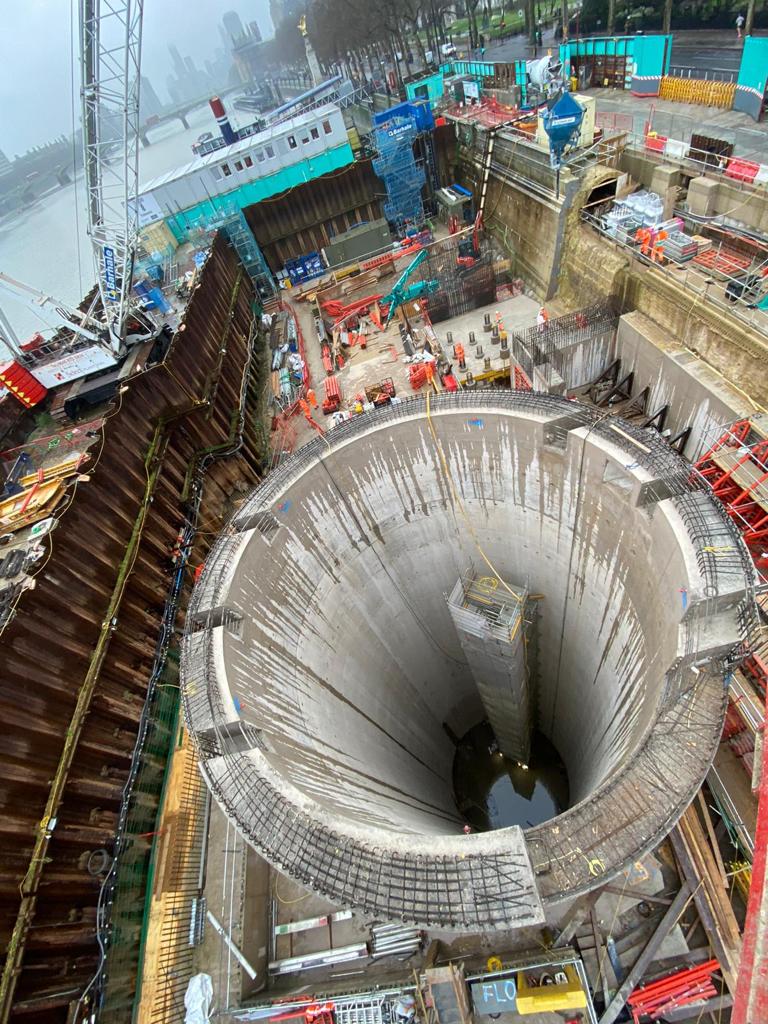

Source: https://en.wikipedia.org/wiki/Thames_Tideway_Tunnel
In my 15 years managing large-scale infrastructure programs, I’ve learned one truth: long-term impact is built on small, well-measured milestones. The Thames Tideway Tunnel milestones strengthen London infrastructure in a way few projects have since Crossrail. This isn’t just another engineering marvel—it’s a turning point for how London treats sustainability, water management, and resilience.
I’ve seen many infrastructure ventures falter under budget drift or political shifts. Tideway’s progress offers a masterclass in staying disciplined through complexity. Let’s break down five pivotal milestones shaping this unprecedented effort and the lessons they hold for leaders navigating large capital programs.
Completion of the Main Tunnel Drive
When I first heard of the tunnel’s “super sewer” ambition, I was skeptical. Digging over 25 kilometers beneath the Thames demanded more than engineering—it required cross-sector coordination and technical precision. The main tunnel drive completion marked a critical milestone that strengthened London infrastructure both technically and symbolically.
From a practical standpoint, this phase showed the power of aligning public bodies, private funding, and technology. At my firm, we once managed a similar multinational project. We learned that hitting a physical milestone isn’t the victory—the real achievement is maintaining morale when timelines stretch and stakeholder expectations diverge.
Integrating Advanced Wastewater Systems
Back in 2018, wastewater management was often treated as a “hidden” issue in urban planning. Today, the Thames Tideway Tunnel milestones prove that integrating smart wastewater systems is key to strengthening London’s infrastructure for decades to come.
The integration phase didn’t just add capacity; it introduced digital monitoring that reduces overflow events into the Thames by over 90%. When we added real-time monitoring to one of our continental construction projects, operational efficiency rose 4%. The same principle applies here—digital tools don’t replace skill, but they amplify precision.
Revamping River Embankments and Public Spaces
The most underrated milestone in the Thames Tideway Tunnel timeline is the regeneration of riverfront spaces. I’ve spoken with civic planners who underestimated how infrastructure shapes social wellbeing. Strengthening London infrastructure isn’t just about pipes and tunnels—it’s about reconnecting people with the river.
When our consultancy helped modernize a Midlands waterfront project, we learned how public amenity improvements drive both civic pride and property value. Tideway’s refreshed embankments echo that lesson: strategic design can transform functional necessity into long-term urban value. That’s what real infrastructure vision looks like.
Future-Proofing Environmental Standards
The reality is, environmental accountability used to be reactive. The Thames Tideway Tunnel milestones redefine it as proactive strategy. This project integrates cleaner flow targets and renewable construction materials far beyond regulatory requirements, setting new benchmarks for London infrastructure.
In 2020, our sustainability team faced a similar dilemma—meeting targets or setting them. We chose the latter, and partners followed. Tideway embodies that same spirit: not just compliance, but leadership. Every city aiming to balance urban expansion with ecological integrity should study this approach carefully.
Collaboration Across Public and Private Sectors
Here’s what nobody talks about: the Thames Tideway Tunnel succeeded because it blurred lines between government oversight and private execution with clarity, not confusion. This milestone may be soft, but it’s the glue holding the rest together.
We once coordinated a joint venture across three ministries and five private contractors—chaos, until we defined decision rights early. Tideway’s governance structure achieved exactly that. From a business lens, this milestone strengthens London infrastructure by institutionalizing collaboration as a competitive advantage.
Conclusion
Look, the bottom line is this: the Thames Tideway Tunnel milestones strengthen London infrastructure not just physically, but operationally, environmentally, and institutionally. Every milestone tells a story of disciplined execution amid political uncertainty.
What I’ve learned across my career is that real legacy projects don’t just build assets—they build confidence. The success of this venture reminds every business leader that progress isn’t a single win but a series of compounding, coordinated steps. The Thames Tideway Tunnel proves precisely that.
FAQs
What is the Thames Tideway Tunnel project?
The Thames Tideway Tunnel is a massive infrastructure initiative aimed at upgrading London’s sewer system. It’s designed to handle storm overflows into the River Thames, strengthening London’s environmental resilience for generations.
How do the Thames Tideway Tunnel milestones strengthen London infrastructure?
Each milestone represents critical progress—engineering completion, environmental gains, and collaborative governance—that collectively modernize London’s urban and ecological systems.
Why is the tunnel often called the “super sewer”?
It’s termed the “super sewer” because it vastly increases capacity and prevents untreated sewage from entering the Thames, significantly improving waterway health.
When is the Thames Tideway Tunnel expected to be operational?
The tunnel is expected to become fully operational by 2025, marking the culmination of years of planning, construction, and integration with London’s existing water systems.
What environmental benefits does the project deliver?
It’s projected to reduce sewage overflow incidents by more than 90%, minimize pollution, and improve aquatic biodiversity along the Thames corridor.
How has technology influenced project execution?
Advanced tunneling machines, real-time monitoring, and predictive maintenance tools have reduced delays and ensured sustainable long-term operation.
What lessons can other cities learn from these milestones?
The project teaches that sustained collaboration, digital integration, and environmental foresight are essential to future-proof large urban infrastructure.
How did public-private partnerships influence success?
Collaboration between government and private investors ensured stable funding, clear accountability, and agile management needed for complex engineering programs.
What was the toughest challenge faced during construction?
Managing logistics under London’s dense environment was a major hurdle, requiring synchronized planning across multiple boroughs and regulatory bodies.
Will the Thames Tideway Tunnel impact property and development in London?
Yes, the project strengthens London infrastructure and boosts nearby property potential through cleaner waterways, improved amenities, and enhanced urban connectivity.