
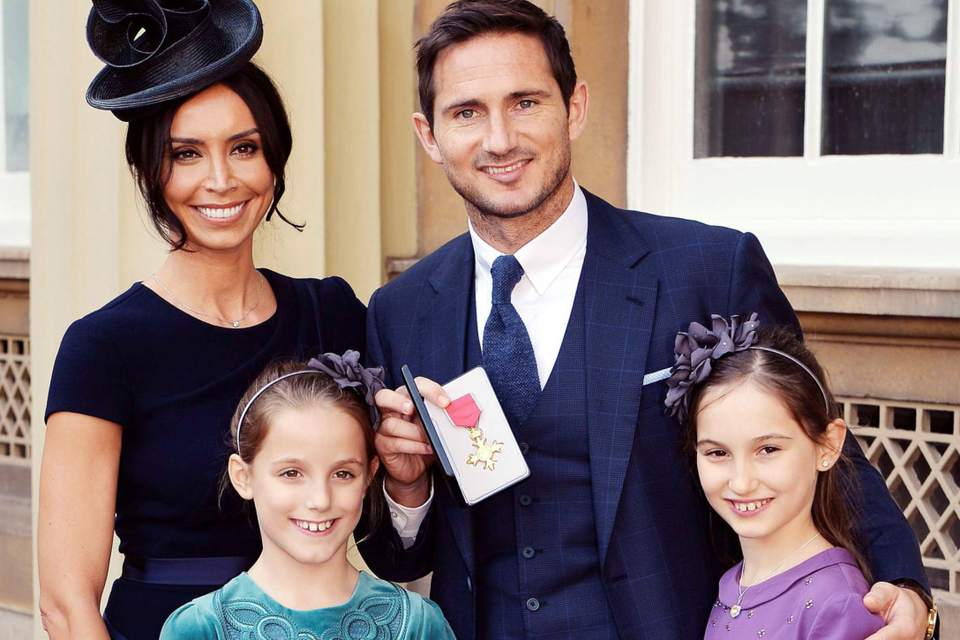

Frank Lampard children news tends to surface in two distinct contexts: lifestyle coverage of his blended family with wife Christine, and occasional mentions of his older daughters from a previous relationship. The narrative is less about scandal and more about how high-profile figures manage complex family structures while maintaining public careers.
Lampard has four children: two daughters, Luna and Isla, from his previous relationship with Spanish model Elen Rivas, and two younger children with Christine—Patricia, age seven, and Freddie, age four. That’s a blended family dynamic that Christine has acknowledged publicly as “difficult” at times, though she also noted it quickly felt “normal”.
The Complexity Of Blended Family Narratives And Public Framing
Christine Lampard has spoken openly about the realities of managing a blended family, emphasizing that while it presented challenges initially, the dynamic normalized over time. That’s strategic transparency. By acknowledging difficulty without dwelling on conflict, she controls the narrative and prevents speculation about tension or dysfunction.
Here’s the bottom line: blended families are common, but they’re scrutinized differently when they’re public. Every interaction, every absence, every mention (or lack thereof) of older children becomes material for interpretation. The key is establishing a consistent public message that acknowledges complexity without inviting invasive coverage.
Frank Lampard himself has credited Christine with taking more responsibility for their children, describing her as a “fantastic mum” while noting that both their careers are intense and scrutinized. That’s not just praise. It’s framing that positions Christine as the primary caregiver, which manages expectations around Frank’s availability and shifts focus away from questions about how he balances time between older and younger children.
Early Football Interest And The Pressure Of Legacy Expectations
Freddie, Lampard’s four-year-old son with Christine, is reportedly already showing interest in football. That’s not surprising given his father’s career, but it’s also the beginning of a narrative arc that will follow him if that interest persists. The reality is that children of elite footballers face automatic comparison, and early interest amplifies expectations rather than reducing them.
What I’ve learned is that public mentions of children’s interests—especially when they align with parental careers—are double-edged. They generate engagement and positive sentiment, but they also lock the child into a narrative trajectory. If Freddie continues playing football seriously, he’ll be measured against his father’s achievements: Chelsea’s all-time leading goal scorer, multiple Premier League titles, Champions League winner.
From a practical standpoint, managing those expectations requires downplaying comparisons early and emphasizing autonomy—letting the child’s interest develop without the weight of legacy narratives. But that’s hard to do when public coverage frames every kick of a ball as “following in dad’s footsteps.”
Work-Life Balance And The Economics Of Dual-Career Households
Frank and Christine have both acknowledged the challenges of balancing intense, scrutinized careers with family responsibilities. Frank has noted the pressure of performing in front of millions while managing expectations, and Christine has discussed how they support each other through demanding schedules.
Look, the data tells us that dual-career households with children face logistical complexity that scales with public visibility. Scheduling conflicts, travel demands, and media attention all intensify the baseline challenges of childcare and family time. The difference for public figures is that those challenges are visible—photographed, commented on, and evaluated by audiences who may have strong opinions about work-life tradeoffs.
The reality is that successful management of this dynamic depends on clear division of labor, mutual support, and strategic decisions about when to prioritize career and when to prioritize presence. Christine’s acknowledgment that she takes more responsibility for the children is part of that calculus—it’s an explicit agreement that allows Frank to focus on his managerial career while maintaining family stability.
Privacy Strategy And Selective Visibility For Older Children
Luna and Isla, Lampard’s daughters from his previous relationship, maintain lower public profiles than Patricia and Freddie. They’re teenagers now—Luna is nineteen, Isla is seventeen—which means they’re old enough to have preferences about visibility but still young enough to be protected by parental discretion.
Here’s what actually works: as children age into adolescence and adulthood, their autonomy over their own public presence increases. The fact that Luna and Isla appear less frequently in public coverage isn’t necessarily a sign of distance or dysfunction. It’s often a sign of deliberate privacy management, either at their request or as part of ongoing co-parenting agreements with their mother.
What’s really happening here is a staged approach to family visibility. Younger children appear in carefully curated lifestyle content—Christine’s social media, family event photos—while older children are referenced but not showcased. That protects their privacy while still acknowledging their existence, which prevents speculation about estrangement or neglect.
The Risk Of Media Narratives Around Blended Family Dynamics
Christine Lampard’s public comments about blended family challenges were made on a podcast, which is a controlled environment where tone and context can be managed. That’s smart. By addressing the topic proactively in a long-form format, she reduces the risk of tabloid misinterpretation or sensationalized headlines claiming “family turmoil.”
The reality is that any public figure with a blended family faces persistent media interest in potential conflict, favoritism, or tension between biological and step-relationships. The default narrative is drama, because drama generates engagement. Countering that narrative requires consistent messaging that normalizes the structure and emphasizes functionality over friction.
From a practical standpoint, the key is repetition and consistency. If Christine and Frank both frame their family as normal, functional, and supportive—even while acknowledging challenges—that becomes the established narrative. It doesn’t eliminate speculation, but it raises the bar for what counts as newsworthy. Frank Lampard children news will continue to surface, but as long as the family maintains strategic control over what’s shared and how it’s framed, the coverage will remain lifestyle-focused rather than scandal-driven.