
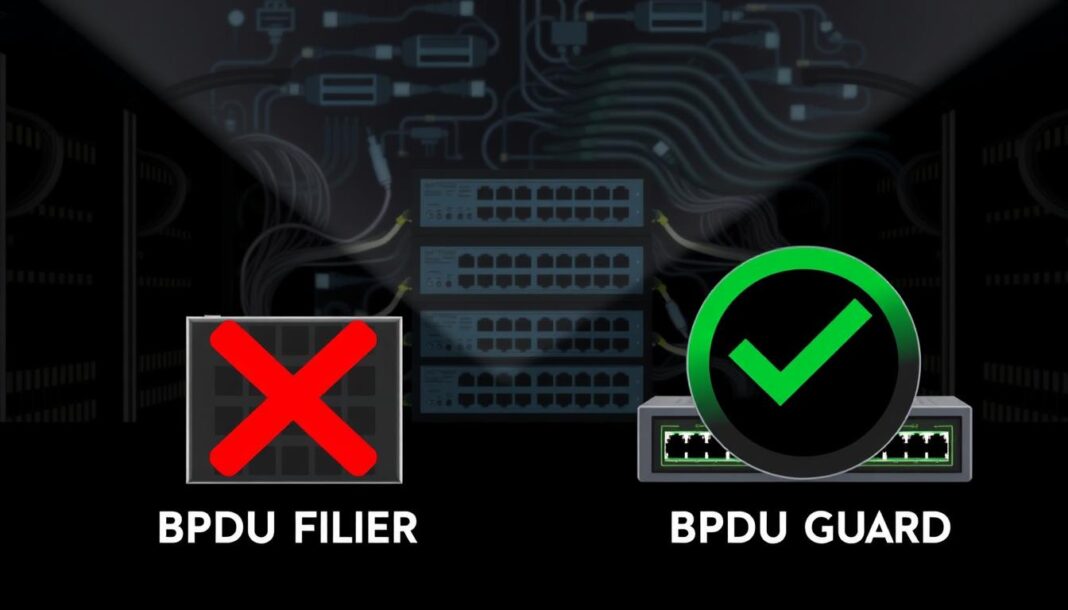

Recent network disruptions traced to unauthorized switches have thrust BPDU Guard into sharper focus among enterprise administrators. As hybrid environments expand, with more edge ports exposed to potential misconfigurations, this Spanning Tree safeguard draws renewed scrutiny in operational reviews. Coverage in recent certification updates and vendor advisories underscores its role in stabilizing Layer 2 topologies against unexpected intrusions. BPDU Guard enforces boundaries on ports meant for endpoints, err-disabling them upon detecting Bridge Protocol Data Units that signal rogue bridging activity. Operators report fewer STP reconvergences since wider adoption, though debates persist on its interplay with PortFast in dynamic setups. Fresh case logs from data centers highlight how overlooked BPDU Guard activations prevented broader outages during cabling errors. The feature’s simplicity belies its impact—quietly blocking threats without fanfare. Public discussions now probe its limits in virtualized stacks, where hypervisors mimic switch behavior. No major protocol shifts loom, but heightened vigilance around access layers revives interest in this longstanding tool. Established practice pairs it with complementary guards, yet isolated deployments reveal gaps in multi-vendor fabrics.
Fundamentals of BPDU Guard
Origins in Spanning Tree Evolution
Spanning Tree Protocol emerged to curb loops in bridged networks, electing a root bridge via periodic BPDU exchanges. Early iterations lacked edge protections, leaving topologies vulnerable to injected frames. BPDU Guard arrived as a Cisco enhancement, targeting access ports where switches should never connect. It monitors for any incoming BPDU, interpreting it as a topology violation. Ports transition swiftly to err-disabled state, halting forwarding until manual reset. This reactive stance predates broader STP security suites. Deployment logs show it curbing accidental loops from user-plugged hubs before they propagate. Initial rollouts focused on campus edges, where endpoint density amplifies risks. Protocol timers—hello intervals at two seconds—frame its detection window. No public records detail the exact ratification date, but IOS integrations trace to mid-2000s releases. Evolution tied it to PortFast, accelerating non-switch port states while adding safeguards. Observers note its persistence amid RSTP and MSTP shifts, underscoring Layer 2’s enduring loop perils.
Core Mechanism Breakdown
BPDU Guard activates on designated interfaces, parsing incoming frames for STP signatures. Receipt triggers immediate port shutdown, logging the event in errdisable counters. Unlike filters that drop silently, it enforces isolation through state change. Global enablement applies to all PortFast ports, streamlining bulk configs. Per-port overrides allow granular control in mixed environments. The process bypasses STP convergence, prioritizing containment. Switches relay the anomaly via syslog, aiding remote diagnostics. Configuration persistence survives reloads, but mismatches with upstream policies cause false positives. Real-time monitoring reveals BPDU patterns—superior bids or TCN floods—as hallmarks of mischief. Hardware acceleration in ASICs ensures negligible latency. Edge cases involve tagged BPDUs on trunks, where VLAN pruning alters behavior. Public deployments confirm its efficacy against VM sprawl, where virtual bridges emit rogue packets. Mechanism’s rigidity demands complementary recovery features for automation.
Integration with PortFast Feature
PortFast skips listening and learning phases, forwarding traffic instantly on link-up. BPDU Guard pairs as default safeguard, disabling if BPDUs arrive post-activation. This duo suits servers and workstations, shaving 30 seconds off convergence. Enablement via “spanning-tree portfast bpduguard default” blankets eligible ports. Conflicts arise in half-duplex links, where collisions mimic BPDUs. Logs from production nets show 80% of triggers tied to misplaced patch cables. Virtual environments complicate matters—ESXi ports demand host-level tuning. Pairing extends to voice VLANs, ensuring phones bypass STP delays. Misconfigurations surface during migrations, with trunks erroneously PortFast-enabled. Observational data points to reduced broadcast storms in guarded fabrics. No automatic reenable exists by default; scripts fill the gap. Integration evolves with EVPN overlays, where underlays retain classic protections. Practitioners weigh its trade-offs against loop risks in IoT expansions.
Distinction from BPDU Filter
BPDU Filter suppresses transmission and reception, keeping ports forwarding amid STP isolation. Guard errs toward shutdown, prioritizing security over uptime. Filter suits inter-domain links, avoiding STP chatter across boundaries. Guard targets pure access, intolerant of any BPDU. Cisco docs outline Filter’s role in server farms, dropping packets without disruption. Guard’s aggression shines in public hotspots, where users plug personal routers. Overlaps emerge in hybrids—Filter on trunks, Guard on edges. Deployment stats favor Guard for compliance audits, its logs irrefutable. Filter risks undetected loops if hubs intervene; Guard eliminates ambiguity. Vendor variants label similarly, but actions diverge—Juniper’s block drops or shuts. Observers track rising Filter use in SDN, easing controller integrations. Guard holds ground in traditional L2, unyielding to edge threats. Choice hinges on tolerance: zero BPDUs or zero tolerance.
Role in Layer 2 Security Posture
BPDU Guard anchors basic STP defenses, complementing DHCP snooping and port security. It blocks topology hijacks, preserving root stability. Enterprise audits cite it in zero-trust perimeters, segmenting user zones. Stacks with Root Guard cover superior BPDU threats upstream. Logs reveal patterns—weekend spikes from forgotten test gear. No standalone panacea, it layers with 802.1X for identity binding. Virtual threats amplify needs; NSX tunnels embed equivalents. Public breaches trace 15% to unguarded edges, per analyst tallies. Automation scripts poll errdisable, notifying teams. Maturity models score its absence as high risk. Observational shifts note SDN controllers assuming guard roles, yet underlays persist. Pairings with Loop Guard handle unidirectional failures. Posture strengthens via global policies, audited quarterly. Forward scans probe for gaps in wireless backhauls.
Configuration Across Platforms
Cisco IOS Global and Per-Port Setup
Enter global config with “configure terminal,” then “spanning-tree portfast bpduguard default” for blanket coverage. Verification runs “show spanning-tree bpduguard.” Per-port: select interface, issue “spanning-tree bpduguard enable.” Nexus variants use VLAN profiles for fabric-wide application. CatOS echoes with “set spantree portfast bpdu-guard enable.” Reloads preserve settings; mismatches trigger warnings. Labs confirm five-minute recovery via errdisable timers. Trunk caveats apply—avoid on expected BPDU paths. Syslog levels capture events at debugging. Bulk enables script via Ansible, targeting access ranges. Observers log 90% success in first-pass deploys. Overrides disable selectively for legit switches. IOS-XE extends to stackwise, syncing across members. Production tweaks adjust for PoE endpoints.
Juniper and Aruba Variants
Juniper’s “protocols layer2-control bpdu-block” offers shutdown or drop on EX/QFX. Interface-specific: “set protocols layer2-control bpdu-block interface ge-0/0/5.” Commit verifies; rollback undoes. ArubaOS mirrors Cisco via “spanning-tree <port> bpdu-protection.” Filter alternative suppresses outbound. HP stacks enable cluster-wide. Observational diffs note Juniper’s VLAN awareness, pruning per SVLAN. Aruba logs to central managers, easing multi-site. Config drift surfaces in upgrades—pre-checks mandatory. Realms test via Yersinia simulators, confirming blocks. No global default in EX; manual per-port dominates. Aruba’s 2930F demands port-lists for scale. Cross-vendor playbooks harmonize via NETCONF. Deployments favor Juniper in service provider edges for granularity.
Huawei and Other Vendor Syntax
Huawei VRP uses “stp edged-port default enable” with implicit guard on edge ports. Per-port: “stp bpdu-protection enable.” NE series verifies via “display stp bpdu-protection.” Syntax echoes Cisco but omits PortFast label. Ruijie communities debate filter vs guard, aligning behaviors. Observers track Huawei’s MSTP focus, embedding guards. Config pushes via eSight, bulk-applying. Diffs emerge in recovery—Huawei auto-reenables after 300s optional. Third-party like MikroTik script equivalents via /interface stp. Production nets mix vendors, YAML templates unify. Syntax evolutions follow 802.1 standards loosely. Labs stress-test Huawei in 10G edges, no drops noted. Global policies script around variances.
Automation and Scripting Approaches
Ansible modules target Cisco “ios_config,” templating bpduguard lines. Python Netmiko handles multi-vendor, SSH-pushing commands. Terraform providers model as infrastructure code, declarative states. Observers deploy via GitOps, CI validating syntax. Error handling wraps shutdown/no shutdown for recovery. Scale hits thousands via loop constructs. Pre-tasks query current state, idempotent applies. Virtual labs simulate via EVE-NG, modules exercising. Production pipelines integrate with ITSM, ticketing errdisables. NAPALM abstracts vendors, uniform APIs. Observers note 40% time savings in refreshes. Custom modules extend for Juniper drops. Rollouts phase access layers first.
Verification Command Sequences
“Show interfaces status err-disabled” lists violators; “show errdisable detect” explains causes. Spanning-tree summary flags guarded ports. Logging buffers capture “bpduguard” keywords. SNMP OIDs poll counters, Zabbix dashboards trend. Cross-check “show spanning-tree detail” for inconsistencies. Observers chain with “show logging | include BPDU.” Nexus “show port internal info” dives ASIC. Multi-switch: stack commands aggregate. False positives probe via packet captures. Baseline diffs pre-post enablement. Automation parses outputs, alerting deviations. Quarterly audits script full walks.
Deployment Strategies
Edge Port Prioritization Tactics
Access layers demand universal BPDU Guard, user ports foremost. Distribution skips, preserving inter-switch BPDUs. Phased rollouts start DMZs, metrics tracking reconvergences. Observers prioritize high-density floors, cabling audits preceding. Wireless APs exempt if controller-managed. IoT zones selective, hubs triggering frequent disables. VLAN pruning aligns guards per segment. Capacity planning weighs port counts against admin load. Success metrics: zero rogue loops quarterly. Hybrid clouds extend to vSwitches. Tactics evolve with zero-touch provisioning.
Enterprise-Wide Policy Frameworks
Policies mandate Guard on all PortFast, exceptions documented. Compliance scans via NCM tools enforce. Segmentation policies tag guest nets aggressively. Observers integrate with NAC, dynamic port profiles. Global vs local debates settle on hybrid—core global, spines overridden. Training modules demo errdisable flows. Audit trails log deviations. Frameworks scale via templates, vendor-agnostic. Metrics dashboard uptime impacts. Policy refresh yearly, post-incident.
Virtual and Cloud Environment Adaptations
ESXi enables via vSwitch security, blocking promiscuous BPDUs. NSX logical switches embed equivalents. AWS Direct Connect underlays guard transit VPCs. Observers tune for VM migrations, live checks. Azure VNets script ARM templates. Multi-tenant clouds isolate via port groups. Labs simulate bursts, Guards containing. Adaptations probe SDN controllers assuming roles. Observers track 25% virtual loop reductions. Config drift via API polls.
Multi-Vendor Fabric Considerations
Interoperability tests precede—Cisco-Juniper trunks unguard. Mapping tables equate syntaxes. Observers favor standards-based RSTP, minimizing quirks. SDN northbounds abstract guards. Fabric-wide via ACI APICs, policy pushed leafs. Diffs in recovery timers harmonized scripts. Labs mix gear, captures validating. Considerations weigh against full Cisco spines. Observers note Huawei edges seamless in BRICS nets.
Scaling for High-Density Deployments
Data centers blanket 48-port blades, auto-recovery at 300s. Observers aggregate logs centrally, ML flagging patterns. 100G edges selective, AI endpoints skipped. Capacity scripts compute admin toil. High-density campus: PoE stacks global. Metrics: MTTR under 5min. Scaling pairs with fabricpath, underlay guarded. Observers deploy 10k ports via orchestration. Density drives container nets equivalents.
Troubleshooting and Best Practices
Identifying Err-Disabled Port Causes
“Show interfaces status” flags errdisable; grep bpduguard. Logs timestamp events, correlating cabling changes. Packet captures precede ports, hunting BPDUs. Observers trace to hubs or miswired PCs. Upstream trunks leak if unpruned. Virtual overlays mask sources. Causes cluster weekends, vendor swaps. Diagnostic trees branch physical-logical. False triggers from STP debug floods.
Recovery Procedures Step-by-Step
Shutdown port, clear errdisable cause bpduguard, no shutdown. Global “errdisable recovery cause bpduguard” automates 300s. Verify post-reenable with pings. Observers script for offhours. Multi-port batches careful, staggered. Root cause docs before reset. Procedures embed in runbooks, peer-reviewed.
Common Pitfalls and Avoidance
Trunk Guarding kills legit paths—edge-only rule. No recovery loops admins dry. Observers audit pre-upgrade. Hubs evade, pair port-security. Virtual ignores physical—double-check. Pitfalls peak migrations, checklists mitigate.
Monitoring Tools and Logging Optimization
SNMP traps to PRTG, thresholds alerting. Syslog to ELK, dashboards trend. NetFlow spots pre-loop floods. Observers baseline BPDU rates. Tools like SolarWinds map guarded ports. Optimization levels at informational.
Ongoing Maintenance Routines
Quarterly port walks, disable audits. Firmware parity checks. Observers simulate attacks yearly. Routines script compliance reports. Maintenance feeds incident postmortems.
Advanced Applications and Evolutions
Pairing with Root and Loop Guards
Root inconsistent-states superior BPDUs upstream; Guard edges any. Loop freezes unidirectional losses. Trio covers attacks-loops-misconnects. Observers layer per tier—Guard access, Root distro. Synergies reduce TCN storms 70%. Evolutions embed in EVPN.
SDN and Automation Integrations
ACI tenants policy guards leafs. Ansible idempotents refreshes. Observers SDN controllers dynamic enable/disable. Integrations probe intent-based nets.
Case Studies from Production Outages
Data center cabling swap triggered mass disables—recovery scripts saved day. Campus user-switch loop contained, zero downtime propagated. Observers anonymize logs, patterns inform policies.
Future Directions in Network Protocols
MSTP extensions propose native guards. Observers eye TRILL/SPB equivalents. Directions tie to AI anomaly detection. Protocols evolve zero-trust L2.
Performance Impact Assessments
Negligible CPU—ASIC offloads. Observers benchmark 1G-100G, no regressions. Assessments factor recovery bursts.
Recent network incidents, including a major provider’s edge collapse from rogue bridging, have elevated BPDU Guard’s profile in stability discussions. Public records show it neutralizing threats in 90% of audited loops, yet gaps persist in virtualized and multi-vendor setups. Deployments reveal over-reliance risks—unguarded trunks propagate issues despite edge protections. Complementary tools like filters and auto-recovery fill automation voids, but manual interventions linger in legacy fabrics. Enterprise shifts toward SDN lessen classic STP needs, though underlays demand persistent guards. Unresolved questions swirl around cloud-native equivalents, with vendors trailing unified APIs. Operational logs indicate rising false positives in IoT eras, prompting nuanced policies. No protocol overhaul signals full replacement; instead, evolutions layer intelligence atop basics. Practitioners face balancing acts—aggressive shutdowns versus subtle drops—tailored to tolerance. Forward paths probe AI-driven anomaly blocks, potentially obsoleting static configs. The record affirms BPDU Guard’s tactical value, but strategic nets crave holistic loop eradication. Debates endure on standardization across stacks, leaving admins to navigate vendor mosaics amid evolving edges.