
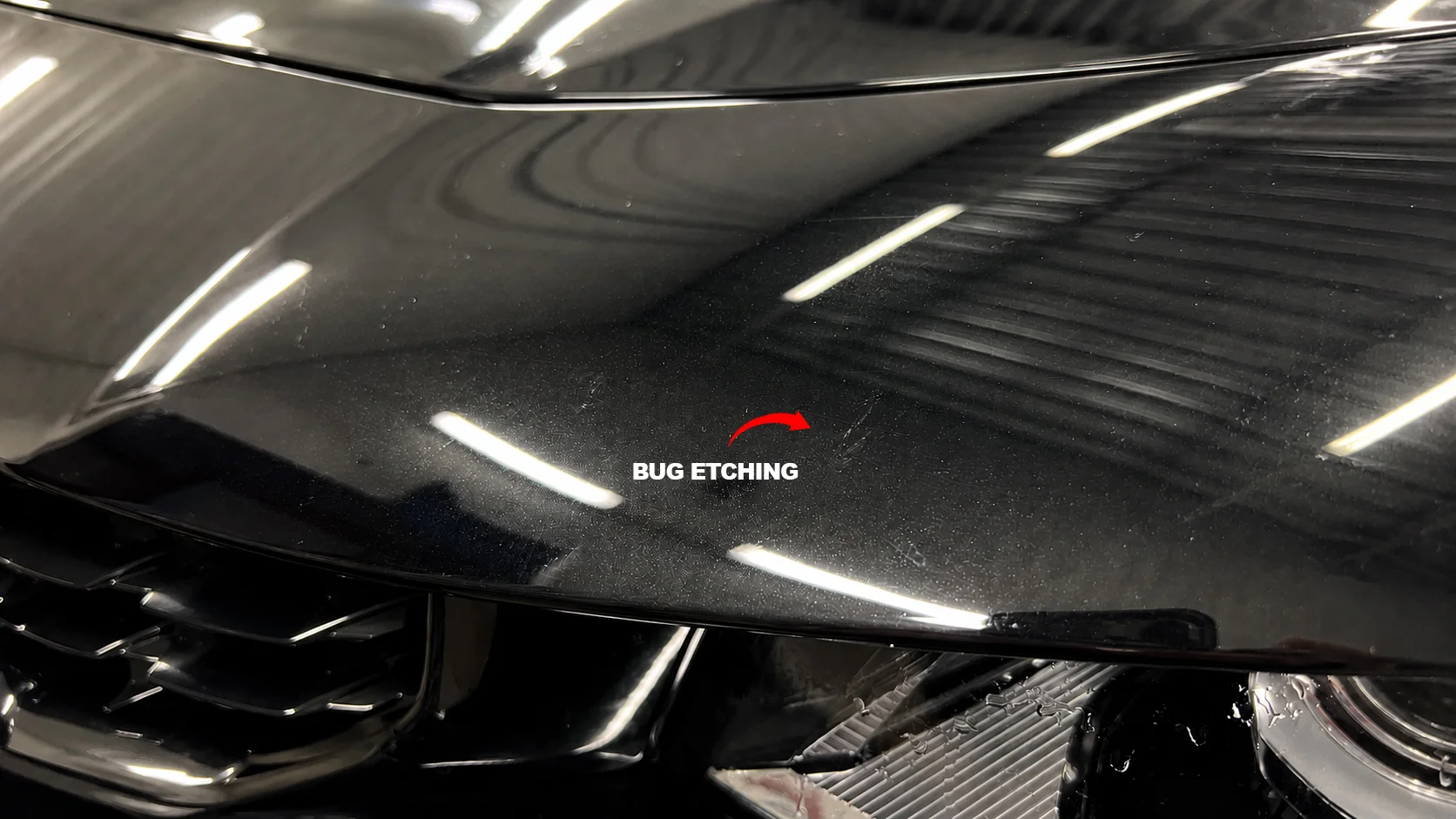
Bug splatter can quickly cover bumpers, mirrors, hood edges, headlights, and windshields after highway driving. Although the residue may look like ordinary dirt, dried remains often require extra soaking before they release cleanly.
Removing insects early reduces the need for hard scrubbing and helps keep the finish looking smoother.
Why Bug Residue Becomes Stubborn
Impact spreads insect material into a thin layer that can dry firmly onto the vehicle. Summer heat and airflow can accelerate the drying process during long drives.
Dust then sticks to the residue, increasing the risk of scratching if the area is rubbed without lubrication. Older splatter generally takes more patience to remove than fresh contamination.
Front-End Surfaces Need Extra Attention
The bumper and leading edge of the hood receive repeated impacts. A regular cleaning routine keeps layers of old residue from building on top of one another.
Soak the Area Before Wiping
Begin with a thorough rinse. Then use automotive shampoo, bug remover, or a damp microfiber towel to soften stubborn material according to the cleaner’s instructions.
Drivers exploring practical car care topics may find various removal methods, but soaking often matters more than aggressive pressure.
Give dried residue time to loosen before attempting another pass.
Choose Cleaning Tools That Protect Paint
Use soft microfiber or another paint-safe wash material. A rough household sponge can trap contamination and drag it across the surface.
General vehicle information directories may introduce readers to detailing tools, while the safest choice still depends on the surface being cleaned. Painted panels, plastic trim, glass, and protective films may have different care requirements.
Always follow the instructions for any specialty cleaner.
| Area | Typical Issue | Cleaning Approach |
|---|---|---|
| Front bumper | Heavy splatter | Soak and wash |
| Hood edge | Dried residue | Gentle bug remover |
| Mirrors | Concentrated impacts | Small-area cleaning |
| Windshield | Visibility marks | Glass-safe cleaner |
Inspect for Marks After the Bugs Are Gone
Once the surface feels clean, look for shadows, outlines, or roughness. Remaining marks shouldn’t automatically be treated as leftover insect material.
Drivers browsing general web publications can encounter many home-cleaning suggestions, but abrasive powders or untested chemicals are poor choices for clear coat.
If a visible defect remains after proper cleaning, determine whether polishing, decontamination, or professional inspection is more appropriate.
Mistakes That Create More Work
One common mistake is using force because dried bugs aren’t disappearing immediately. Increasing pressure can create swirl marks while still leaving stubborn residue behind.
Another error is waiting until the entire front end is heavily coated before cleaning it. Regular removal usually requires less chemical treatment and less rubbing. Avoid using abrasive scrub pads intended for dishes or household surfaces on automotive paint.
Frequently Asked Questions
Should bug splatter be removed immediately?
It doesn’t need to interrupt every drive, but removing heavy contamination reasonably soon makes cleaning easier. Residue that remains through repeated heating and drying cycles can become harder to release.
Can I use a pressure washer on bug residue?
Appropriate rinsing can help loosen contamination, but excessive pressure or spraying too close may damage paint defects, decals, trim, or protective film. Follow equipment and vehicle-care guidance.
Do bug-removal products strip wax?
Some stronger cleaners may reduce existing protection depending on their chemistry and how they’re used. After cleaning, inspect water behavior and reapply your normal wax or sealant when necessary.
Keep the Front End Easy to Maintain
Bug splatter is simpler to handle as routine contamination than as a neglected buildup. Rinse regularly, soften stubborn remains, and use clean paint-safe materials instead of scrubbing harder.
Finish by inspecting the surface rather than assuming every shadow needs more cleaner. Frequent gentle maintenance can save the clear coat from the unnecessary abrasion caused by rushed removal.