
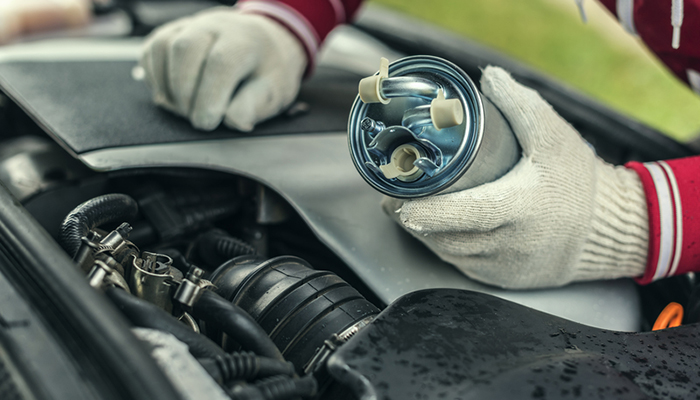
A fuel filter protects the engine by trapping contaminants before they reach sensitive fuel-system components. As debris accumulates, a serviceable filter can eventually restrict fuel flow. A clogged fuel filter may then contribute to hesitation, weak acceleration, difficult starting, or poor performance under load, especially when the engine demands more fuel.
Why Fuel Flow Matters Under Load
An engine may need relatively little fuel while idling but considerably more during acceleration, climbing, or highway driving. A partially restricted filter can sometimes pass enough fuel at low demand and become noticeable only when demand rises.
That pattern makes preventive car maintenance particularly useful. Replacing serviceable filters according to the vehicle’s maintenance requirements can prevent restrictions from progressing unnoticed.
Modern Fuel Systems Vary
Not every vehicle has an external fuel filter designed for routine replacement. Some filters are integrated into the fuel-pump module or fuel tank.
Before buying parts, check the vehicle’s service information. Assuming every car uses the same filter arrangement can lead to wasted work.
Symptoms Can Look Like Other Fuel Problems
Restricted fuel delivery may cause hesitation, loss of power, hard starting, or stalling. Yet those signs can also come from a weak fuel pump, failing sensor, ignition problem, clogged air intake, or other engine faults.
Drivers comparing fuel-saving vehicle habits should therefore avoid treating reduced fuel economy as proof of a clogged filter. The symptom is too broad on its own.
| Performance Change | Filter Connection | Other Possibility |
|---|---|---|
| Weak acceleration | Fuel flow restricted | Weak pump |
| Hard starting | Pressure builds slowly | Battery or ignition issue |
| Power loss under load | Demand exceeds flow | Sensor or airflow fault |
| Intermittent stalling | Fuel supply interrupted | Electrical problem |
How a Restricted Filter Is Diagnosed
Testing depends on the fuel-system design. A technician may inspect fuel-pressure behavior, fuel volume, diagnostic data, or other system measurements before concluding that the filter is restricting flow.
Vehicle owners using engine reliability resources should remember that replacing an inexpensive-looking part by guesswork can still waste time if the actual fault lies with the pump, regulator, electrical supply, or engine management system.
Fuel-System Work Requires Care
Fuel can ignite easily, and fuel systems may remain pressurized after the engine is switched off. Pressure must be handled according to the vehicle’s proper service procedure before lines are disconnected.
Work should also be performed away from flames, sparks, cigarettes, and other ignition sources. If the correct depressurization and connection procedure isn’t known, professional service is the safer choice.
Common Fuel-Filter Assumptions That Fail
One mistake is assuming a filter must be clogged because the car loses power. Modern engines can reduce performance for dozens of reasons, and blindly changing the filter can hide the need for proper diagnosis.
Another error is ignoring installation direction on filters designed for one-way flow. Correct fittings, seals, orientation, and leak checks matter. A newly installed filter is not a successful repair if the system leaks afterward.
Protecting Fuel Delivery Over Time
Follow the manufacturer’s maintenance schedule when your vehicle has a serviceable fuel filter. Avoid running a vehicle with known fuel-system problems for long periods because weak pressure or contamination may affect other components.
If power loss becomes severe, the engine repeatedly stalls, or fuel is leaking, stop treating the issue as ordinary maintenance and arrange appropriate inspection.
Frequently Asked Questions
Can a clogged fuel filter cause poor acceleration?
Yes. A restricted filter may prevent enough fuel from reaching the engine during higher demand, although weak pumps, sensors, ignition faults, and airflow problems can produce similar symptoms.
Do all cars need regular fuel-filter replacement?
No. Some vehicles have replaceable external filters, while others use filters integrated with the in-tank fuel module. Check the maintenance information for the specific model.
Can a fuel filter cause a car not to start?
A severely restricted filter can contribute to insufficient fuel delivery, but no-start conditions have many causes. Fuel pressure, ignition, battery condition, and engine-management faults may also require testing.
Keep Fuel Moving Freely
Clogged fuel filters can restrict performance, but replacement should match the design and diagnosis of the vehicle. Follow the correct service interval where applicable, investigate symptoms instead of guessing, and treat any fuel leak as a serious repair issue. Clean, unrestricted fuel delivery helps the engine perform as its control system expects.