
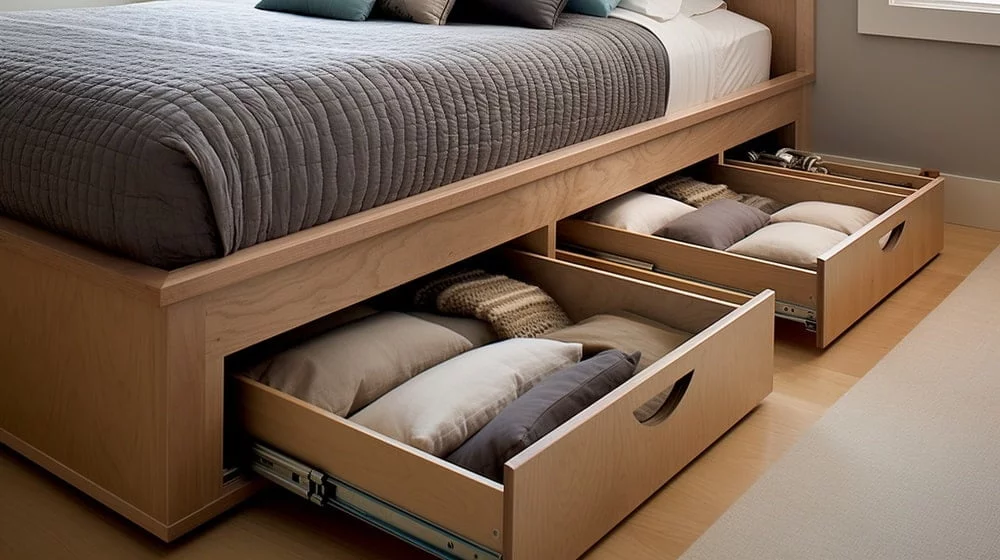
The area beneath a bed can provide useful storage, but it easily becomes a hiding place for random belongings. Shoes, bags, boxes, forgotten clothing, and loose objects can disappear there for months. Turning messy underbed space into functional storage means deciding what belongs underneath, containing it properly, and keeping everything accessible enough to use.
Clear the Entire Area Before Organizing It
Start by removing everything from beneath the bed. Sorting around existing piles makes it too easy to leave unwanted objects exactly where they are.
Use the same principle common to organized home spaces: decide what deserves storage before deciding what container should hold it. Throw away obvious trash and relocate items that already have better homes elsewhere.
Choose Categories That Suit Hidden Storage
Underbed space works best for belongings that are needed occasionally but not every day. Seasonal clothing, extra bedding, spare shoes, travel accessories, or sentimental items may fit.
Avoid placing frequently used objects in difficult-to-reach positions unless the containers slide out easily.
Measure Before Choosing Containers
Beds vary greatly in clearance. Measuring height, width, and accessible depth prevents purchasing bins that technically fit underneath but cannot slide past the frame.
Ideas associated with efficient room storage can help with planning because dimensions matter more than container appearance. Leave enough clearance to pull storage out without lifting the bed.
| Item Type | Container Choice | Access Level |
|---|---|---|
| Seasonal clothes | Lidded bin | Occasional |
| Spare bedding | Fabric case | Occasional |
| Shoes | Shallow organizer | Regular |
| Keepsakes | Protected box | Rare |
Keep Containers Easy to Identify
Hidden storage becomes frustrating when several identical boxes must be opened to locate one item. Labels on the outward-facing edge solve much of that problem.
Broader space-saving storage ideas can also encourage grouping similar objects together. One container labeled “Winter Accessories” is easier to manage than three unrelated boxes containing scarves, cables, notebooks, and shoes.
Avoid Loose Items Under the Bed
Individual objects quickly migrate toward the center where they become difficult to reach. Containers define boundaries and make cleaning easier.
If something isn’t worth placing into an assigned category, consider whether it needs to remain under the bed at all.
Where Underbed Storage Goes Wrong
The biggest mistake is treating hidden space as unlimited space. Because clutter isn’t visible, people may continue pushing belongings underneath until containers become inaccessible.
Another problem is storing items that are vulnerable to dust, moisture, pests, or crushing without suitable protection. Delicate fabrics, important papers, and valuable keepsakes may require a more controlled location. Hidden doesn’t automatically mean protected.
Leave Room for Cleaning and Access
Don’t pack containers so tightly that none can be removed without shifting the others. Front-facing handles or low-profile bins make routine access much easier.
Vacuum or clean beneath the bed periodically. If containers must be moved, use that moment to review contents and remove items you no longer need.
Frequently Asked Questions
What items are best stored under a bed?
Seasonal clothing, spare bedding, occasional shoes, travel accessories, and other low-frequency belongings are often suitable when protected in properly sized containers.
Should underbed storage containers have lids?
Lids can protect contents from dust and help keep loose items contained. The need for sealed storage depends on the belongings and conditions in the room.
How do I stop underbed storage from becoming cluttered?
Assign specific categories, label containers, avoid storing loose objects, and set a physical limit based on the containers that fit comfortably underneath.
Treat Hidden Space Like Real Storage
Underbed space becomes useful only when it follows the same rules as a visible closet or cabinet. Decide what belongs there, contain similar items together, label anything difficult to identify, and preserve enough room to pull containers out easily. Don’t use the bed as a place to postpone decisions about clutter. Hidden storage should solve a space problem rather than conceal one.