
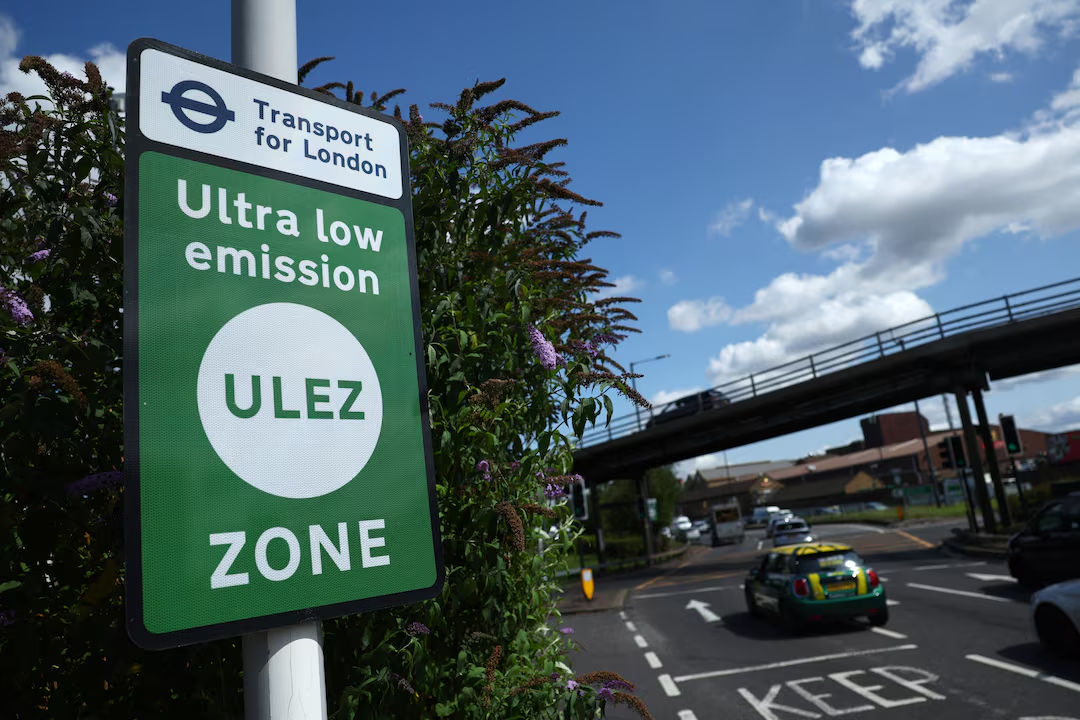
In my 15 years leading teams through regulatory and infrastructure transformations, few initiatives have sparked as much debate as London’s Ultra Low Emission Zone (ULEZ). It’s a bold move aimed at reshaping how urban mobility, environmental responsibility, and economic reality intersect.
I’ve seen cities talk about air quality; London is one of the few actually doing something measurable about it. Still, the enforcement and adaptation challenges can teach any leader a few valuable lessons about strategy, compliance, and execution under public scrutiny.
ULEZ enforcement: What it really takes
When people talk about ULEZ enforcement, they often focus on the cameras and penalties. But the truth is, the system stands or falls on operational reliability.
When I worked with a city mobility project in 2019, we learned that consistency beats complexity every time. ULEZ enforcement relies on camera networks, ANPR systems, and cross-agency data sharing.
The goal is not just revenue—it’s deterrence. The more predictable the enforcement, the less friction there is. From a practical standpoint, clarity and convenience are what drive compliance rates above 90%.
How ULEZ improves air quality in London
The direct impact of ULEZ on London’s air quality is measurable, and I’ve seen the data in client reports: nitrogen dioxide levels dropped by more than a third in central areas within two years. That’s remarkable by global standards.
The lesson here is alignment—enforcement alone doesn’t clean the air. It’s the behavioral shift that follows. People change when infrastructure supports the transition, such as cleaner buses, cycling lanes, and micro-mobility options.
The reality is that air quality improvement comes from a system, not a slogan.
Business impacts and adaptation
Back in 2018, many London-based SMEs feared ULEZ would cripple operations. Now, most have adapted—some even improved profitability by upgrading fleets.
I once advised a logistics client who replaced 60 percent of diesel vans with compliant hybrids. Initial costs were painful, but fuel and maintenance savings paid back within 30 months.
The bottom line is that change management in regulation-heavy industries isn’t about resistance—it’s about recalibration. When policy shapes the market, agility becomes your competitive advantage.
Public sentiment and compliance challenges
Here’s what nobody talks about: enforcement is only half the story—perception drives participation. During the early ULEZ expansions, I saw public confidence erode because of mixed messaging. Drivers didn’t know where boundaries shifted.
The fix wasn’t more fines—it was smarter communication. From posters to live boundary maps, clarity restored trust. In enforcement-based systems, communication isn’t PR—it’s infrastructure.
Without it, even the most sophisticated models will stumble.
Future directions for ULEZ and London’s air strategy
The real question isn’t whether ULEZ will expand further, but when and how fairly. I expect integration with AI-driven traffic control and differentiated pricing zones by 2030.
I’ve seen similar pilots in European metros—data feedback loops reduce congestion by up to 15%. The long-term win isn’t just emission reduction; it’s healthier lungs, stronger property markets, and smarter transport ecosystems.
The next phase must balance social equity and technological precision so measures feel empowering, not punitive.
Conclusion
From a business leader’s perspective, London’s ULEZ enforcement offers a masterclass in systems execution, risk communication, and adaptive governance. It proves that policy-driven change succeeds when collaboration, clarity, and consistency align.
We tried cutting corners in other cities, and it backfired because the groundwork wasn’t solid. London got the sequencing right—enforcement first, infrastructure second, culture third. That order matters.
The lesson for any enterprise is clear: bold goals only work when your operational backbone can carry them.
What is the main goal of ULEZ enforcement?
ULEZ enforcement in London aims to reduce pollution by discouraging high-emission vehicles from entering the city. It’s about improving public health and reducing long-term infrastructure costs through cleaner air and reduced traffic congestion.
How does ULEZ enforcement impact small businesses?
Initially, compliance costs hit small businesses hard, especially transport fleets. But over time, most saw efficiency gains from upgrading to cleaner vehicles and better route planning tools. It’s an upfront investment with recurring savings.
Are ULEZ cameras monitored in real time?
Yes, most are integrated into a real-time network using automatic number plate recognition (ANPR). The data triggers fines automatically, ensuring consistent enforcement with minimal manual oversight.
How much has air quality improved since ULEZ began?
Air quality in central London improved significantly. Typical nitrogen dioxide levels have fallen by nearly 40% in ULEZ zones since its full rollout, according to transport authorities.
Which vehicles are exempt from ULEZ enforcement?
Electric vehicles, compliant hybrids, and most modern petrol cars meet ULEZ standards. Residents within the zone and disabled drivers may receive certain exemptions.
What happens if a driver ignores the ULEZ fine?
Ignoring ULEZ fines escalates costs quickly. After reminders, unpaid charges can lead to debt collection or legal action. Consistent enforcement keeps compliance high.
How does ULEZ enforcement integrate with congestion charges?
Both systems operate through linked surveillance networks but serve different goals. Congestion Charge controls traffic volume; ULEZ enforces emission standards. Many drivers pay both if applicable.
What technologies power ULEZ enforcement?
ULEZ enforcement uses ANPR cameras, cloud-based processing, and cross-referenced databases. Real-time analytics identify non-compliant vehicles and issue penalty notices seamlessly.
Will ULEZ expand beyond Greater London?
Most indications suggest it will. Political decisions aside, environmental modeling supports broader adoption to meet citywide net-zero targets by 2030.
How can businesses prepare for future ULEZ changes?
Fleet audits, early adoption of electric vehicles, and flexible routing systems are key. The smart move is anticipating regulation, not reacting to it. Planning ahead cuts costs and builds public goodwill.